
Partner with Hire Chore and focus on your strengths.
*100% free, no-obligations consultation to determine your Ops blockers

Enter your info to receive the guide instantly.
A 30-day window is useful for triage, control, and priority remediation. It is not evidence that an unknown backlog can be finished in a month. The feasible result depends on the records available, the reliability of the starting balances, the number of entities and systems, and the technical questions uncovered.
Start by defining what investors or advisers have actually requested. Then preserve a dated snapshot of the current ledger, reconcile the highest-risk balances, route judgment calls to the right specialist, and document anything still unresolved. The goal is not “perfect books.” It is a financial package whose important numbers trace to source records, with visible owners for every material exception.
At Day 30, the answer should be one of three states:
Ready to share: the requested outputs trace to reviewed evidence, and the designated decision owner has approved the package.
Share with disclosed exceptions: the core package is supportable, but a defined issue remains open with an owner, effect, and resolution date.
Not ready: a required output, opening balance, source record, or specialist decision remains too unreliable for the company to represent the package as complete.
This is an operational framework, not accounting, tax, securities, or legal advice. If a correction affects a filed return, payroll tax, revenue recognition, a financing instrument, or a legal ownership record, involve the qualified professional who owns that conclusion.
Decide whether you need catch-up, cleanup, or reconstruction
These projects are often bundled together. For purposes of this framework, the terms mean the following:
- Catch-up means transactions or entire periods have not been recorded and closed.
- Cleanup means transactions exist, but balances, classifications, dates, or support are unreliable.
- Reconstruction means the team cannot establish a trustworthy starting point from the current ledger and available records.
A startup can need catch-up and cleanup at the same time. Reconstruction is the stop sign. If you cannot support the opening balances, are missing important source records, or have years of unexplained changes, do not let a calendar force the bookkeeper to invent certainty.
Run this feasibility gate before anyone edits the ledger:
| State | What you find | What the 30-day window should produce |
|---|---|---|
| Green | The required periods are known, source statements are available, the prior close is usable, and issues are mostly routine | Execute the cleanup, review the requested outputs, and make a documented share decision |
| Amber | Records exist but systems do not tie, technical questions are open, or specialist review must run in parallel | Complete the reliable core, document exceptions, and decide what can be shared with disclosure |
| Red | The opening balance is unreliable, important records are missing, prior filings may be affected, or the ledger needs multi-period reconstruction | Produce a professional reconstruction scope and defer or narrow the package with the recipient's agreement |
The state is a project decision, not an accounting opinion. Move from green to amber or red as soon as the evidence changes.
Put the whole project in one cleanup control workbook
Do not manage the cleanup through disconnected messages and spreadsheets. Use one control workbook, database, or equivalent source of truth. The tool can be simple, but it should contain six linked records:
| Tab or record | Minimum fields | Feeds into |
|---|---|---|
| 1. Request and scope | Requested output, entity, period, deadline, recipient, decision owner | Final output sign-off |
| 2. Account and system inventory | Source, account, period, owner, statements received, access status | Reconciliation tracker |
| 3. Reconciliation tracker | Account/month, statement balance, ledger balance, difference, preparer, reviewer, support location | Exceptions and output sign-off |
| 4. Adjustment log | Original amount, revised amount, reason, evidence, preparer, technical approver if needed, date | Final trial balance and review trail |
| 5. Exception register | Issue, affected output, possible effect, missing evidence, owner, status, target date, disclosure decision | Readiness status |
| 6. Output sign-off | Requested output, source schedule, preparer, reviewer, open exception, decision owner, share status | Final package |
Each fact should have one home. Link the records rather than copying the same status into several tabs. This makes the final readiness decision a result of the work, not a fresh opinion assembled on Day 30.
Start with the actual request, then freeze the baseline
Treat diligence lists as examples rather than universal requirements. A sample venture-capital request list from Cooley includes audited financial statements, recent unaudited monthly statements, and other financial information. The actual scope should come from the request for the specific transaction and its advisers.
Before building a generic “investor-ready” package, record five facts in the request-and-scope tab:
- Which entities and periods are in scope?
- Which statements, schedules, and metrics have been requested?
- What is the real delivery date?
- Who will prepare, technically approve, and finally review each item?
- Which open questions must be disclosed rather than silently fixed?
Next, preserve a dated baseline snapshot. Export the general ledger, trial balance, chart of accounts, current financial statements, reconciliation reports, and available audit or change history. Record the export date and restrict unnecessary edits to closed periods. Ask the accounting-system owner to confirm separately whether platform backup, rollback, or restoration options exist. Report exports alone may not restore the accounting file.
The snapshot lets the team explain what changed and recover the prior evidence if a correction creates a new discrepancy. Without it, a cleanup can become a sequence of invisible edits that nobody can review.
Days 1–10: collect evidence and establish cash completeness
This framework recommends controlling cash, cards, and payment processors before relying on downstream reports. Those accounts show what actually moved, and older unresolved periods often feed the opening balance of every later period. Work from the oldest unfinished period forward unless the diligence deadline requires a documented parallel track.
Create an inventory of every legal entity, bank account, credit card, payment processor, billing system, payroll platform, expense tool, loan, and accounting file used during the target period. For each, record the period covered, owner, whether statements or source records have been received, and access status.
Then reconcile cash, cards, and processors against the ledger. Every unexplained difference should either be corrected with evidence or moved to the exception register. Do not force a difference to zero by creating an unsupported journal entry.
For records and retention, use the current IRS rules that apply to the business and its returns rather than a generic “keep everything for seven years” rule. The IRS notes that record-retention periods vary by the action, expense, or event the document records. See the IRS retention guidance.
Days 11–17: tie subledgers and source systems to the general ledger
Once cash completeness is credible, connect the operational records to the ledger.
Accounts receivable
Tie the AR aging to the receivables control account. Investigate old balances, unapplied cash, customer credits, duplicate invoices, and balances that lack support. If a material receivable is disputed, make the dispute visible instead of quietly leaving it in aging.
Accounts payable
Tie the AP aging to the payables control account. Review old vendor balances, duplicate liabilities, unapplied vendor credits, bills recorded in the wrong period, and balances with no source document.
Payroll
Compare payroll reports to ledger postings for wages, employer taxes, employee deductions, cash funding, and payroll-related liabilities. The IRS says employment-tax records should generally be kept for at least four years after the tax becomes due or is paid, whichever is later. See the IRS employment-tax recordkeeping page.
Debt and financing
Tie loan or note balances to lender statements or executed financing records. Track principal, interest, fees, accrued amounts, and the classification used in the books. If the instrument's accounting treatment is unclear, route it to the controller, CPA, or technical accounting owner rather than solving it in the cleanup spreadsheet.
The same logic applies to deferred revenue, prepaid expenses, fixed assets, inventory, intercompany balances, or other material accounts. The operator's job is to establish the evidence chain and surface the exception. A qualified accounting reviewer owns any technical conclusion the books depend on.
Days 18–23: correct routine errors and route judgment calls
Not every bookkeeping error needs a technical memo. Some fixes are straightforward when the evidence is clear:
- duplicate transaction;
- transaction posted to the wrong account;
- missing bank-fee entry;
- documented vendor credit not applied;
- clearly duplicated customer receipt;
- routine coding error supported by the source document.
Record every adjustment in the adjustment log with the original amount, revised amount, reason, evidence, preparer, reviewer, and date.
Stop and escalate when a proposed correction affects technical accounting, a filed return, payroll taxes, ownership, financing, or legal interpretation. Examples can include:
- revenue recognition or deferred revenue;
- equity or convertible instruments;
- prior-period financial statement changes;
- taxable versus non-taxable treatment;
- payroll tax corrections;
- related-party transactions;
- material write-offs or reserves;
- legal ownership or capitalization records.
The project owner can collect evidence and keep the issue moving. The qualified professional should make the conclusion.
Use the 30-day window as a dependency map
Several workstreams can overlap, but their dependencies matter more than the dates.
| Window | Primary outcome | Exit test |
|---|---|---|
| Days 1–3 | Required outputs, scope, owners, baseline snapshot, and feasibility state | Everyone knows what must be delivered and what would stop the plan |
| Days 4–10 | Source records collected; cash, cards, and processors reconciled | Each in-scope account has a reconciliation or linked exception |
| Days 11–17 | AR, AP, payroll, debt, and other source systems tied to the ledger | Breaks in the evidence chain that could affect requested outputs are logged and assigned |
| Days 18–23 | Routine errors corrected; judgment calls routed | No technical issue is being silently decided by the wrong owner |
| Days 24–27 | Financing activity, schedules, and financial statements assembled | Statements agree with the final trial balance and supporting schedules, or differences are disclosed |
| Days 28–30 | Final review, exception memo, readiness decision, and next close calendar | The decision owner can explain what is complete, what is open, and what may be shared |
If the team misses an exit test, do not hide the miss by advancing the status. Re-plan the dependency, narrow the deliverable with the recipient's agreement, or move the package to “share with disclosed exceptions” or “not ready.”
Days 28–30: sign off the requested outputs
Run the readiness test against the actual diligence request, not a generic notion of clean books.
For every requested output, complete this record:
| Field | Required entry |
|---|---|
| Requested output | Exact statement, schedule, metric, entity, and period |
| Source and tie-out | Ledger report, supporting schedule, and source-record location |
| Preparer | Person who assembled or adjusted it |
| Reviewer | Person with relevant expertise who did not self-review a consequential judgment |
| Open exception | Linked issue, possible effect, owner, and disclosure status |
| Decision owner | Company representative authorized to approve, disclose, narrow, delay, or reject the output |
| Share status | Ready, share with disclosed exception, or not ready |
Where materiality is relevant, the qualified accounting or legal reviewer applies the standard appropriate to the reporting context. Materiality is entity- and fact-specific, and this workbook does not define it or turn a founder's checklist into an accounting opinion.
Before the decision owner signs off, confirm:
- the entities, periods, systems, and requested outputs are explicit;
- the baseline snapshot and adjustment log are retained;
- important ledger entries trace to source documents or schedules;
- cash, card, and payment-processor accounts reconcile or carry a disclosed exception;
- material balance-sheet accounts have support;
- AR, AP, payroll, debt, and financing schedules tie to the ledger or carry a disclosed exception;
- financial statements agree with the final trial balance;
- technical accounting, tax, payroll, and legal issues have qualified owners;
- unresolved issues are quantified where possible and included in the exception memo; and
- the team has a close calendar and named owner for the next month.
Then assign the package its status based on the output sign-offs:
- Ready to share: Every requested output has evidence and completed review; any issue requiring technical review has a documented conclusion; no other unresolved exception is incompatible with sharing; and the authorized decision owner approves the package.
- Share with disclosed exceptions: The affected output is otherwise supportable, the exception is described and owned, and the recipient can understand the limitation. Disclosure is not a substitute for a required technical conclusion.
- Not ready: A requested output lacks reliable evidence or review, or an unresolved issue prevents the company from standing behind it.
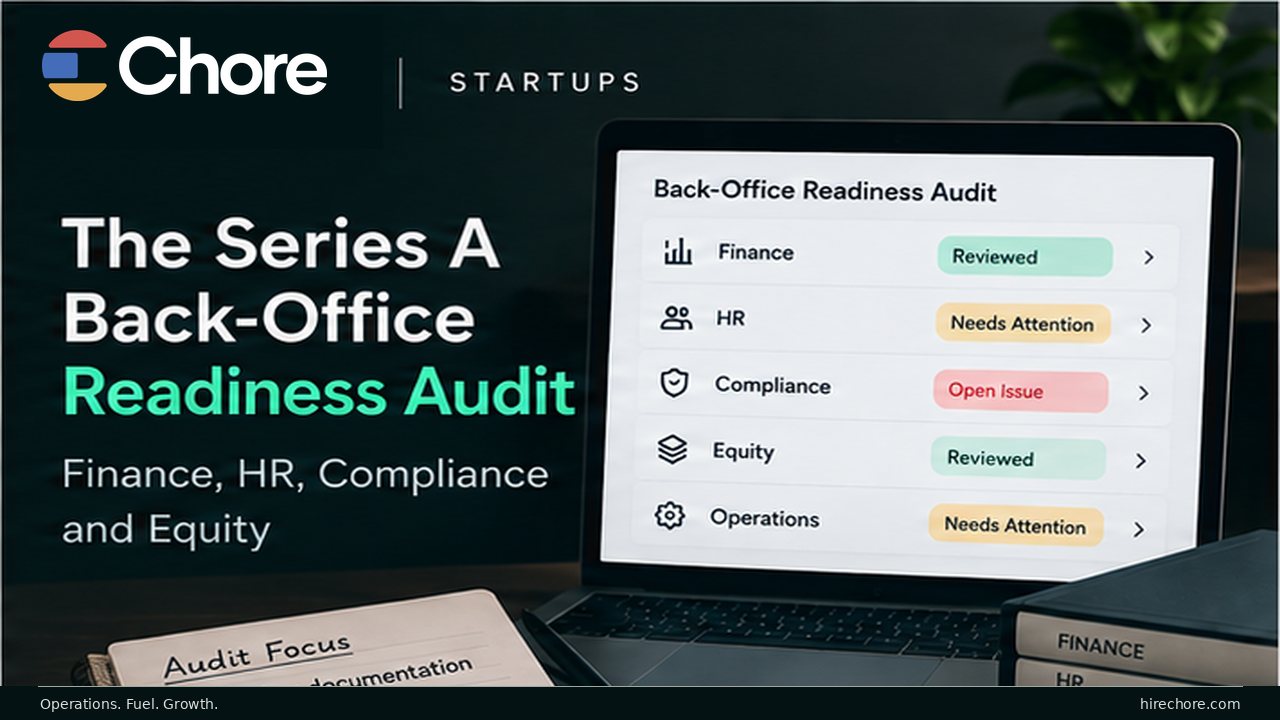
Once the package is reliable, place it in the broader fundraising data room. For a broader cross-functional readiness check before outreach, use the Series A Back-Office Readiness Audit. If the requirement is a formal audit rather than investor diligence, use the separate guidance on preparing for a first financial audit.
If the package is not ready
Do not relabel a red project as amber to meet a deadline. Take three concrete actions:
- Scope the reconstruction. Identify the affected entities, periods, accounts, missing records, technical questions, proposed specialists, and earliest defensible deliverable.
- Control the communication. Ask the recipient whether a narrower period or preliminary package is useful. Describe limitations precisely; do not imply that disclosure cures unreliable numbers.
- Protect the work already completed. Preserve the baseline snapshot, reconciliations, adjustment log, exceptions, and reviewer decisions so the reconstruction does not restart from zero.
The safe next move may be delaying a requested output, not accelerating unsupported corrections.
Make the rescue the last rescue
A cleanup that ends with a static folder will recur. The handoff should name who closes each source, the target close date, the evidence retained, the reviewer, and the escalation route. It should also turn the failure exposed during cleanup into a recurring control. If payment-processor deposits failed to tie, for example, add that reconciliation and exception owner to every close. Chore's month-end close checklist covers the recurring process in more detail.
The correct Day 30 answer may still be “not ready.” That is a controlled result if the team can show what is missing, why it matters, who owns it, and what happens next. It is safer than presenting polished statements whose foundations nobody can explain.
If you cannot trust the latest close, ask Chore about scoping historical cleanup and ongoing monthly-close support. Its current product page describes connecting key accounts and past data, reconciling data from other systems, historical cleanup, and recurring bookkeeping. Ask for a written scope covering the periods, accounts, outputs, assumptions, specialist handoffs, timing, and fees.

The Chore team consists of individuals from diverse backgrounds with a passion for learning and a desire to share knowledge.
Chore's content, held to rigorous standards, is for informational purposes only. Please consult a professional for specific advice in legal, accounting, or other expert areas.